
Customer acquisition has never been more competitive. Rising advertising costs, increased consumer choice and changing shopping habits mean that attracting a new customer is only half the battle. The businesses that consistently outperform their competitors are those that give customers a compelling reason to return again and again.
That is where a well-designed loyalty program comes in.
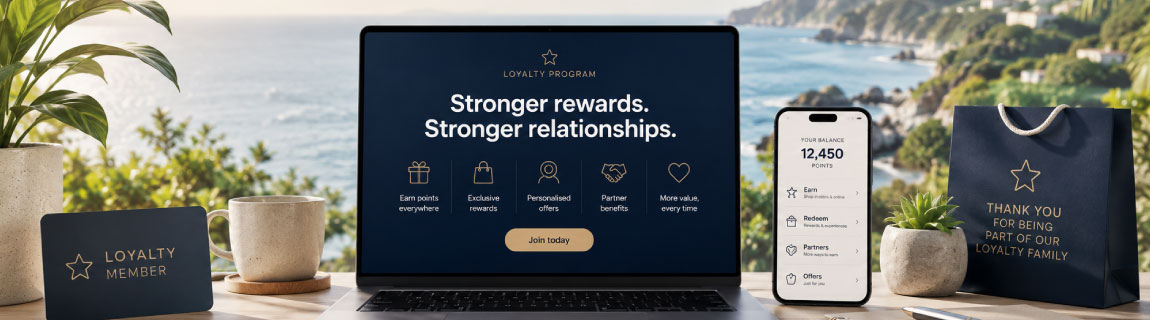
The most successful loyalty programs are no longer just about collecting points. They create meaningful relationships, deliver personalised experiences, reward engagement across multiple channels and generate valuable customer insights that help retailers make smarter business decisions.
Whether you operate an online store, a network of physical retail locations or a true omnichannel business, investing in a modern loyalty strategy can significantly increase customer lifetime value while strengthening your competitive advantage.
Loyalty is No Longer Just About Discounts
Many retailers still view loyalty as offering customers a discount after a certain number of purchases.
While this may encourage occasional repeat purchases, it rarely creates genuine customer loyalty.
Great loyalty programs reward customers with experiences, recognition, convenience and exclusive benefits. They make customers feel valued rather than simply offering another promotion.
This distinction is important.
A discount encourages someone to buy today.
A loyalty program encourages them to keep choosing your business for years.
Learn From the World’s Best Loyalty Programs
Some of the world’s most recognised brands have invested billions of dollars developing loyalty ecosystems that have become valuable businesses in their own right.
Qantas Frequent Flyer
Qantas Frequent Flyer is one of Australia’s most successful loyalty programs because it extends far beyond air travel.
Members can earn Qantas Points through flights, hotels, fuel, insurance, utilities, wine purchases, credit cards and hundreds of retail partners.
One of the most interesting examples is the partnership between David Jones and Qantas Frequent Flyer. Customers can link their accounts and earn Qantas Points while shopping both online and in-store, giving them another reason to choose David Jones over competing retailers.
Rather than building an isolated rewards program, David Jones has connected itself to one of Australia’s most recognised loyalty ecosystems.
The lesson for retailers is simple.
Customers are far more likely to engage with rewards they already understand and value than an entirely new points system with limited redemption options.
Starbucks Rewards
Starbucks transformed its mobile application into a loyalty platform.
Customers can order ahead, store payment methods, collect rewards, receive personalised offers and earn free products based on their purchasing behaviour.
The result is an experience that feels fast, personalised and convenient rather than transactional.
Sephora Beauty Insider
Sephora focuses heavily on exclusivity.
Customers receive tiered membership levels, early access to product launches, exclusive events, personalised beauty recommendations and premium experiences that encourage ongoing engagement.
The rewards become increasingly valuable as customers move through the membership tiers.
Amazon Prime
Amazon Prime demonstrates that loyalty does not always require a points-based program.
Instead, members receive benefits including fast shipping, streaming services, exclusive offers and convenience.
The perceived value is so high that customers naturally increase their spending with Amazon to maximise their membership.
What Makes a Great Loyalty Program?
Successful loyalty programs understand customer psychology.
People enjoy seeing progress.
They appreciate recognition.
They value exclusive access.
They enjoy earning status.
They like being rewarded for their engagement.
The best programs create emotional value rather than simply financial value.
This is why programs that rely entirely on permanent discounts often struggle to build long-term loyalty.
Customers eventually expect the discount rather than viewing it as a reward.
Think Beyond Points
Although points remain popular, modern loyalty programs can reward customers in many different ways.
Rewards might include:
- Exclusive products
- VIP events
- Free shipping
- Birthday rewards
- Product launches
- Early access to sales
- Complimentary services
- Store experiences
- Personal shopping appointments
- Invitations to community events
- Gift cards bonuses
Likewise, customers can be rewarded for far more than making purchases.
Businesses increasingly recognise customers for:
- Product reviews
- Referrals
- Social media engagement
- Profile completion
- Product registrations
- Store visits
- Event attendance
- Mobile app usage
Every interaction strengthens the relationship between the customer and the brand.
Create a True Omnichannel Experience
Today’s customers move seamlessly between online and offline shopping.
They might discover a product on Instagram, research it on your website, visit a physical store to see it, then complete the purchase from their mobile phone later that evening.
Your loyalty program should follow the customer throughout that journey.
Customers should have:
- One membership
- One rewards balance
- One customer profile
- One consistent experience
Whether they purchase online, through a mobile device or inside a physical retail store, every interaction should contribute towards their loyalty status.
This requires strong integration between your eCommerce platform, point of sale system and customer database.
The experience should feel effortless.
Partner Integrations Can Multiply Value
One of the biggest opportunities many retailers overlook is partnering with existing loyalty ecosystems.
Instead of asking customers to participate in another standalone rewards program, businesses can integrate with loyalty networks that customers already actively use.
The Qantas Frequent Flyer ecosystem demonstrates this perfectly.
Customers can earn points while purchasing flights, shopping at David Jones, booking hotels, purchasing fuel, using credit cards and engaging with hundreds of participating partners.
Each new partnership increases the value of the entire ecosystem.
For retailers, joining an established loyalty network can provide immediate credibility while giving customers another reason to purchase from your business instead of a competitor.
The value extends well beyond points.
Customers begin associating your brand with a broader lifestyle experience.
Commerce Data is the Foundation of Modern Loyalty
The most effective loyalty programs are powered by data.
Every transaction provides valuable insight into customer behaviour.
When integrated correctly, your commerce platform becomes an incredibly powerful source of intelligence.
Information such as:
- Purchase history
- Favourite brands
- Product categories
- Average order value
- Purchase frequency
- Store location
- Customer lifetime value
- Browsing behaviour
- Product returns
can all be used to personalise customer experiences.
Instead of sending identical promotions to every customer, retailers can deliver highly relevant offers based on genuine customer preferences.
Someone who regularly purchases camping equipment should receive different offers from someone interested in luxury fashion.
This level of personalisation dramatically improves customer engagement.
AI is Changing Loyalty Programs
Artificial Intelligence is transforming loyalty from reactive to predictive.
Rather than simply rewarding purchases after they occur, AI can identify opportunities before the customer even begins shopping.
Modern AI platforms can predict:
- Which customers are likely to stop purchasing
- Products a customer is most likely to buy next
- The ideal time to send an offer
- Which rewards will generate the highest engagement
- Customer lifetime value
- Preferred communication channels
This allows retailers to intervene before customers leave while creating highly personalised experiences that feel genuinely helpful.
Connect Loyalty With Your Marketing
A loyalty program should never operate in isolation.
When connected with marketing automation platforms such as Klaviyo, Dotdigital or Hubspot, retailers can automate highly personalised customer journeys.
For example:
A customer reaches Gold membership.
An automated workflow immediately:
- Sends a congratulatory email.
- Applies bonus reward points.
- Unlocks exclusive products.
- Invites them to an upcoming VIP event.
- Delivers a personalised discount based on previous purchases.
These experiences happen automatically while maintaining a highly personal feel.
Measure What Matters
Launching a loyalty program is only the beginning.
The best retailers continually analyse performance and optimise the experience.
Important metrics include:
- Repeat purchase rate
- Customer lifetime value
- Average order value
- Purchase frequency
- Redemption rate
- Active loyalty members
- Revenue generated by members
- Customer retention
- Referral revenue
These metrics provide a far more accurate picture of loyalty success than simply counting the number of registered members.
Common Loyalty Program Mistakes
Many loyalty initiatives fail because businesses focus on technology rather than customer experience.
Some of the most common mistakes include:
- Launching without clear business objectives.
- Creating rewards that customers do not value.
- Making points difficult to understand.
- Ignoring physical retail stores.
- Failing to integrate online and offline purchases.
- Treating every customer the same.
- Offering little personalisation.
- Forgetting mobile users.
- Not integrating with marketing automation.
- Choosing software before defining a loyalty strategy.
Technology should support your strategy, not define it.
How to Get Started
Building a successful loyalty program begins with understanding what your business is trying to achieve.
Some retailers want to increase repeat purchases.
Others want to improve customer retention, grow average order value, encourage referrals or strengthen relationships with their highest-value customers.
Once these objectives are defined, analyse your existing customer data.
Identify who your best customers are, what they purchase, how frequently they buy and what motivates them to return.
Next, choose a loyalty platform that integrates seamlessly with your existing technology stack.
Consider compatibility with:
- Shopify
- Adobe Commerce
- CRM
- Point of Sale systems
- Marketing automation platforms
- Mobile applications
- Analytics platforms
Avoid selecting software based purely on features.
Instead, focus on how well it supports your long-term customer experience strategy.
Finally, integrate every touchpoint.
The most valuable loyalty programs connect commerce, marketing, customer service, retail stores and business systems into one unified customer view.
Why Choosing the Right Partner Matters
Many loyalty projects fail because businesses purchase software without first designing the customer experience.
A specialist commerce partner can help define measurable business objectives, select the right loyalty platform, integrate your existing systems and ensure your program works consistently across online and physical retail channels.
More importantly, they understand how customer data should flow between your eCommerce platform, ERP, CRM, POS and marketing systems to create highly personalised experiences.
The technology itself is only one part of a successful loyalty strategy.
The real value comes from designing a program that customers genuinely enjoy using and that supports your broader commercial objectives.
Final Thoughts
The world’s best loyalty programs have evolved far beyond collecting points.
Programs like Qantas Frequent Flyer demonstrate how powerful loyalty becomes when retailers, airlines, financial institutions, hotels and other partners work together to create an ecosystem that customers actively participate in every day.
For retailers, the opportunity is significant.
A well-designed loyalty program can increase customer lifetime value, improve retention, strengthen brand advocacy and generate richer customer insights that improve every aspect of your business.
Combined with integrated commerce data, omnichannel experiences and AI-driven personalisation, loyalty becomes far more than a marketing initiative.
It becomes one of your business’s most valuable long-term growth strategies.