

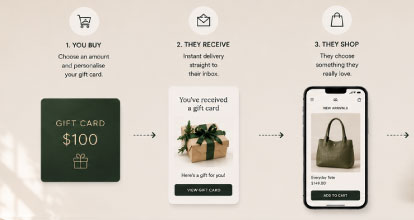
Gift cards are often treated as a simple feature that B2C commerce platform typically offer.
In reality, they’re one of the most effective revenue drivers available to retailers.
Across the retailers we’ve worked with, it’s surprisingly common to see gift cards among the best-selling products. In several cases, they’ve even been the number one selling SKU across the entire catalogue.
That’s hardly surprising when you consider the benefits.
Gift cards generate immediate revenue, introduce new customers to your brand, increase average order value and often encourage repeat purchases. Yet despite their commercial value, many retailers still treat gift cards as an afterthought rather than a strategic part of their eCommerce offering.
Whether you’re operating a single online store, a national retail network or multiple retail brands, a well-planned gift card strategy can become a meaningful contributor to long-term growth.
Why Gift Cards Are So Valuable
Unlike most products, gift cards generate revenue before any physical goods leave the warehouse.
For retailers, this creates several advantages:
- Immediate cash flow.
- Low fulfilment costs for digital cards.
- Increased customer acquisition.
- Higher average order values.
- Strong seasonal sales.
- Excellent corporate gifting opportunities.
Gift cards also remove one of the biggest barriers to purchase.
Instead of choosing the perfect product, customers simply purchase spending power, allowing the recipient to make the final decision.
For birthdays, Christmas, Mother’s Day, Father’s Day and corporate rewards, this flexibility makes gift cards one of the easiest products to purchase.
Gift Cards Often Spend Above Their Face Value
One of the most overlooked benefits of gift cards is their effect on average order value.
Imagine a customer redeems a $100 gift card.
They browse your website, discover several products they like and ultimately spend $148.
Instead of using only the available balance, they simply pay the additional $48 during checkout.
This behaviour is incredibly common.
Gift cards reduce purchase resistance because customers already perceive part of the purchase as “paid for”, making it psychologically easier to spend more.
For retailers, this frequently leads to larger orders than the original gift card value.
Every Gift Card Creates a New Customer Opportunity
The purchaser of a gift card is often different from the person who eventually redeems it.
That means every gift card has the potential to introduce your brand to someone who may never have visited your website otherwise.
If their first experience is positive, that customer may return again and again.
Gift cards therefore become more than just a revenue stream. They’re also a customer acquisition channel.
Unlike many forms of advertising, you’re acquiring customers who arrive with purchasing intent already built in.
Digital vs Physical Gift Cards
Most retailers begin with digital gift cards because they’re quick to implement and simple for customers to use.
Digital gift cards typically offer:
- Instant delivery by email.
- No postage costs.
- Last-minute purchasing.
- Immediate redemption.
- Easy online management.
They’re ideal for customers shopping close to birthdays, holidays or special occasions.
Physical gift cards, however, continue to play an important role.
Many customers still prefer giving something tangible.
Physical gift cards can be displayed in-store, included in gift packaging or purchased alongside other products, creating additional merchandising opportunities.
They’re particularly popular for:
- Christmas.
- Employee rewards.
- Customer appreciation.
- Corporate gifting.
- Premium retail experiences.
Rather than viewing digital and physical cards as competing options, many successful retailers offer both.
Shopify Gift Cards
Shopify includes native support for digital gift cards, making it easy for merchants to begin selling them online.
Core functionality includes:
- Digital gift card creation.
- Email delivery.
- Online redemption.
- Balance tracking.
- Simple administration.
For many small to medium retailers, these capabilities are more than sufficient.
As retailers grow, however, additional requirements often emerge.
These may include:
- Physical gift cards.
- Corporate ordering.
- Custom packaging.
- Omnichannel redemption.
- Advanced reporting.
- Multi-store management.
- Card activation workflows.
These requirements often extend beyond the native functionality available within the platform.
Adobe Commerce Gift Cards
Adobe Commerce provides more advanced native gift card capabilities designed for enterprise retailers.
Features include support for:
- Virtual gift cards.
- Physical gift cards.
- Combined physical and digital products.
- Gift card balance management.
- Multi-site deployments.
- Integration with broader commerce workflows.
For larger retailers operating multiple storefronts or complex customer journeys, Adobe Commerce provides considerably greater flexibility out of the box.
When Specialist Gift Card Platforms Become Valuable
As retailers mature, gift cards often become far more than a simple checkout feature.
They become a dedicated sales channel requiring sophisticated management.
This is where specialist gift card platforms can add significant value.
Solutions such as Vii extend the capabilities of platforms like Shopify and Adobe Commerce by providing enterprise-grade gift card management, including:
- Physical and digital gift cards.
- Corporate ordering.
- Card production.
- Omnichannel redemption.
- Balance management.
- Branded customer experiences.
- Bulk purchasing.
- Secure activation workflows.
- Advanced reporting.
For retailers generating significant revenue through gift cards, investing in a dedicated solution can deliver a much more seamless customer experience while reducing operational complexity.
Multi-Store Gift Card Best Practice
Customers increasingly expect gift cards to work wherever they shop.
Whether they purchase online or in-store, the experience should feel consistent across every sales channel.
Best practice includes:
- Buy online and redeem in-store.
- Buy in-store and redeem online.
- Real-time balance updates.
- One balance shared across all locations.
- Consistent redemption rules.
- Staff visibility of balances.
Nothing creates frustration faster than discovering a gift card purchased from one store cannot be redeemed somewhere else within the same retail business.
A unified experience should be considered the standard.
Gift Cards for Multi-Brand Retailers
Retail groups often own multiple brands that appeal to similar customer demographics.
Rather than maintaining completely separate gift card programs, many groups now offer a single gift card that can be redeemed across several brands.
Imagine a retail group operating:
- Fashion Brand A.
- Homewares Brand B.
- Outdoor Brand C.
Instead of forcing customers to choose one brand, a single gift card provides flexibility to spend wherever the recipient prefers.
This approach offers several commercial benefits:
- Higher perceived value.
- Greater redemption flexibility.
- Cross-brand customer acquisition.
- Increased basket sizes.
- Improved customer loyalty.
For retail groups looking to maximise customer lifetime value, shared gift card ecosystems can be a powerful strategic advantage.
Corporate Gift Cards Are Often Overlooked
Many retailers focus exclusively on consumer gift card sales.
Corporate customers represent another significant opportunity.
Businesses regularly purchase gift cards for:
- Employee recognition.
- Christmas gifts.
- Sales incentives.
- Customer rewards.
- Staff milestone celebrations.
- Competition prizes.
These orders are often placed in bulk and can represent substantial revenue during key trading periods.
Creating dedicated landing pages and streamlined ordering processes for corporate buyers can unlock an entirely new customer segment.
Optimising Gift Cards for Search Engines
Many retailers simply create a gift card product and leave it at that.
Instead, gift cards deserve their own optimised landing page.
Consider targeting searches such as:
- Gift Cards.
- eGift Cards.
- Digital Gift Cards.
- Birthday Gift Cards.
- Christmas Gift Cards.
- Last Minute Gifts.
Your landing page should include:
- Frequently asked questions.
- Delivery information.
- Expiry details.
- Redemption instructions.
- Physical versus digital options.
- Corporate purchasing information.
This not only improves search visibility but also answers common customer questions before they become support enquiries.
Designing a Better Gift Card Experience
A successful gift card experience extends well beyond the checkout.
Best practice includes:
- Multiple preset values.
- Custom amounts.
- Personalised messages.
- Scheduled delivery dates.
- Attractive imagery.
- Mobile-friendly purchasing.
- Simple balance checking.
- Clear redemption instructions.
- Apple and Google Wallet storage capability
The easier the purchasing experience, the more likely customers are to complete their purchase, particularly during busy holiday periods.
Common Gift Card Mistakes
Despite their popularity, many retailers still miss significant opportunities.
Some of the most common mistakes include:
- Hiding gift cards deep within navigation.
- Offering only one denomination.
- Not supporting both physical and digital cards.
- Separate balances for online and retail stores.
- No corporate purchasing process.
- Poor mobile experience.
- No dedicated landing page.
- Limited seasonal promotion.
- No reminder campaigns before Christmas or Mother’s Day.
- No email automation encouraging repeat purchases or reminding customers to redeem outstanding balances.
Addressing these issues can dramatically improve both customer experience and gift card sales.
Final Thoughts
Gift cards have evolved far beyond being a convenient last-minute present.
For many retailers, they’re a significant source of revenue, a customer acquisition channel and an effective way to increase average order value.
Whether you’re operating a single online store, a national retail network or multiple retail brands, investing in a thoughtful gift card strategy can generate meaningful commercial benefits.
The most successful retailers don’t simply enable gift cards because their commerce platform supports them.
They design an experience that works seamlessly across online and in-store channels, supports both digital and physical cards where appropriate, and treats gift cards as an integral part of their broader customer engagement strategy.
Like any successful commerce initiative, the technology is only one part of the equation. The real opportunity comes from creating a gift card experience that’s easy to buy, easy to redeem and valuable enough that customers come back long after the original purchase has been made.