Category: eCommerce Strategy
Explore expert eCommerce strategy insights from OSE covering digital transformation, platform selection, business cases, ROI, customer experience, B2B commerce, growth strategies and practical advice to help organisations plan, justify and deliver successful eCommerce initiatives.
-
View Article: Google Pay for eCommerce: How to Reduce Checkout Friction and Increase Conversion
The final stages of an eCommerce checkout carry enormous commercial weight. A customer may have spent twenty minutes researching products, comparing options and building their cart. Yet the sale can still be lost when they are asked to find a credit card, enter payment details, complete a long address form or create an account. Google…
-
View Article: The Ultimate Guide to Express Checkout for eCommerce
Every additional step in an eCommerce checkout creates another opportunity for the customer to leave. Customers may abandon because they cannot find their card, do not want to create an account, struggle to enter information on a mobile device or encounter a payment method they do not trust. Even highly motivated customers can be lost…
-
View Article: Click & Collect Masterclass: Turn Online Orders Into In-Store Revenue
A customer buys a pair of leggings online and chooses to collect them from your store. When they arrive, their order is ready. A team member offers a fitting room, helps them confirm the size and shows them a matching top. They leave with an outfit, confidence in their purchase and a reason to return.…
-
View Article: Last-Minute Black Friday Optimisations: 10 Changes You Can Make This Week
With Black Friday approaching, there’s still time to improve your store’s shopping experience. The best place to start is the journey customers will take from your campaign to checkout. Can they find the offer? Understand the product? See what delivery will cost? Complete their purchase on a phone? Small problems at these points can undermine…
-
View Article: How to Turn Around a Struggling eCommerce Store
A struggling eCommerce store is rarely a lost cause. In many cases, the business has strong products, loyal customers and a recognisable brand. The underlying opportunity is still there. What is missing is an eCommerce platform capable of converting that opportunity into revenue. Poor performance can become normal surprisingly quickly. Conversion rates remain low. Development…
-
View Article: The Ultimate eCommerce Strategy for Pet Retailers
Pet retail is uniquely suited to eCommerce. Customers frequently purchase the same food, litter, medication, treats and care products. Many households own more than one pet, creating multiple recurring needs. Physical stores provide convenience, advice and access to services, while online channels give customers greater choice and easier ways to manage regular purchases. For major…
-
View Article: Why Your eCommerce Project Failed
An eCommerce project rarely fails because of one bad design decision or a single technical mistake. More often, failure begins much earlier. The project starts without enough discovery, success is poorly defined, the wrong implementation partner is selected, or price is prioritised over capability. By the time the problems become visible, the budget has been…
-
View Article: How to Use AI in eCommerce to Increase Online Sales
Artificial intelligence is quickly changing how customers discover products, compare their options and decide what to buy. For eCommerce businesses, the opportunity is much larger than using AI to write product descriptions or answer customer enquiries. AI can improve almost every stage of the customer journey, from attracting better-qualified visitors to helping customers find products,…
-
View Article: How to Sell More Online Using AI: A Guide for eCommerce Retailers
AI is creating new opportunities for eCommerce retailers to attract customers, improve conversion rates and generate more revenue from their existing traffic. The difficulty is knowing where to begin. There are now thousands of AI products promising to automate marketing, personalise the customer experience and increase sales. Some can deliver measurable value. Others add cost…
-
View Article: Why a Returns Portal and RMA Process Are Essential for eCommerce Growth
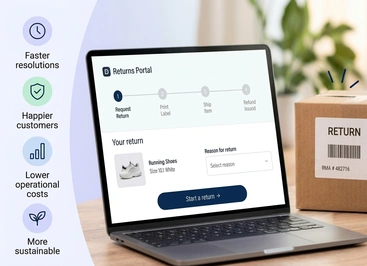
Returns are often treated as an unavoidable cost of doing business online. But for well-run eCommerce brands, they are also an opportunity to improve customer loyalty, reduce operational costs and gather valuable product insights. A dedicated returns portal, supported by a clear Return Merchandise Authorization (RMA) process, turns what can be a frustrating and labour-intensive…
-
View Article: Apple Pay Features Every eCommerce Merchant Should Know
Apple Pay is often treated as a convenient payment button for customers using an iPhone. For eCommerce merchants, however, it can provide much more than a faster way to enter card details. Apple Pay supports streamlined product-page purchases, shipping selection, recurring payments, pre-orders, automatic account reloads and order tracking through Apple Wallet. Its payment sheet…
-
View Article: How to Protect Your eCommerce Site from Hackers: An Essential Security Guide
Running an eCommerce store means handling valuable information, including customer names, addresses, passwords and payment details. That makes online stores attractive targets for cybercriminals. A successful attack can disrupt sales, expose sensitive data and damage customer trust. Fortunately, you can significantly reduce the risk by following a layered security strategy. Here are the most important…
-
View Article: The Ultimate eCommerce Shipping Guide: Reduce Costs, Improve Delivery and Protect Margin
Shipping is one of the most influential—and frequently underestimated—parts of the ecommerce experience. Customers use delivery cost, speed and convenience to decide whether to complete an order. Behind the scenes, retailers must coordinate inventory, packaging, carriers, insurance, fulfilment locations and customer communications while protecting already narrow margins. The solution is rarely to find one carrier…
-
View Article: How to Deliver a Winning Click & Collect Experience
Click and collect has evolved from a convenient delivery alternative into an important part of the omnichannel customer experience. For shoppers, it offers the speed of online purchasing without the cost or uncertainty of home delivery. For retailers, it can convert store inventory into an ecommerce advantage, reduce fulfilment costs and bring digitally acquired customers…
-
View Article: Top 5 AI Agent Use Cases for eCommerce Growth
Artificial intelligence is already helping eCommerce teams generate content, analyse data and respond to customers. AI agents take this further. Rather than waiting for a separate instruction at every step, an AI agent can interpret an objective, gather relevant information, choose an appropriate action and use connected systems to complete a task. It might analyse…
-
View Article: The Home & Garden eCommerce Growth Playbook: How to Increase Conversion, Average Order Value and Margin
Home and garden ecommerce presents retailers with an unusual growth challenge. Customers increasingly begin their journey online, but many products in the category remain difficult to evaluate without seeing, touching or measuring them. Furniture must fit a room. Paint must look right under different lighting. Garden products may require technical knowledge. Bulky orders introduce delivery…
-
View Article: The True Cost of an eCommerce Platform: How Retailers Can Reduce TCO Without Starting Again
When ecommerce costs become difficult to control, replatforming is often presented as the obvious solution. A newer platform promises lower licence fees, fewer upgrades, faster releases and less technical overhead. For retailers operating complex Adobe Commerce environments, the comparison frequently points towards a SaaS platform such as Shopify Plus. Sometimes that recommendation is correct. But…
-
View Article: How to Scale Online B2B Revenue
For many B2B companies, generating online revenue is no longer the difficult part. The real challenge is scaling it. A business may attract website traffic, produce leads and close occasional digital opportunities without having a repeatable growth engine. Revenue remains dependent on individual salespeople, inconsistent campaigns or a small number of major customers. Sustainable scale…