Category: Shopify
Shopify insights for B2B and B2C retailers growing on Shopify and Shopify Plus, covering platform strategy, integrations, performance, UX and scale.
-
View Article: eCommerce Replatforming Guide: Platforms, Agencies, Costs and Timelines
eCommerce replatforming means moving your online store to a different commerce platform. It can improve customer experience, simplify operations and give your business room to grow. It also requires careful decisions about investment, technology and the people responsible for delivery. A successful move starts with a clear business case. Before comparing platforms or requesting proposals,…
-
View Article: How to Change eCommerce Agencies Without Disrupting Your Business.
Changing eCommerce agencies can feel like a significant operational risk. Your current agency may have built the website, configured its integrations and supported it for years. They understand the customisations, know where problems tend to occur and hold knowledge your internal team may not have. Even when the relationship is no longer working, staying can…
-
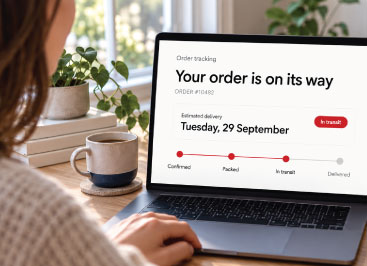
View Article: Order tracking: keeping customers informed after checkout
A customer completes a purchase, receives an order confirmation and starts looking forward to delivery. For the merchant, the work shifts to processing, fulfilment and dispatch. For the customer, a new set of questions begins. Has my order been processed? Has it left the warehouse? When will it arrive? How clearly a business answers these…
-
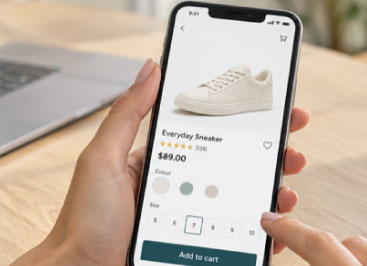
View Article: Mobile Product Pages: Helping Customers Buy on a Smaller Screen
A customer arrives on your product page after tapping a search result, an advertisement or a link shared by a friend. They are interested enough to take a closer look, but they still have questions. Is this the right product? Which size or configuration do they need? What does it cost? When will it arrive?…
-
View Article: Mobile Navigation: Helping Shoppers Find the Right Product Faster
A customer opens your store on their phone with a product in mind. They might know exactly what they want, have a general idea or need help understanding the available options. Your navigation needs to support each of those starting points. For eCommerce merchants, mobile navigation influences how easily customers move from interest to a…
-
View Article: Customer Accounts: Giving Shoppers a Reason to Sign In
A customer account should make shopping easier each time someone returns. For the shopper, that might mean checking an order, finding a saved product, updating a delivery address or choosing which messages they receive. For the merchant, it creates an opportunity to provide a more consistent experience across purchases and service interactions. The value depends…
-
View Article: B2B eCommerce Pricing: Connecting contracts, customer price groups and your ERP
For B2B merchants, the price displayed online is part of a commercial relationship that may have taken years to establish. A trade customer might receive a standard discount across most products, negotiated prices on selected items and additional savings when ordering in volume. A national account might have different arrangements for individual branches. Another customer…
-
View Article: Shop Pay and the Shop app: extending your Shopify store beyond the website
For ecommerce merchants, getting a customer onto your website is only part of the job. Making checkout easy, keeping customers informed about delivery and giving them reasons to return all contribute to a successful store. These moments are often treated as separate activities: marketing brings people in, checkout handles the transaction and customer service deals…
-
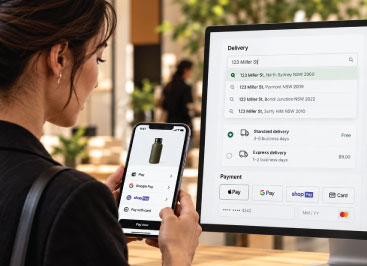
View Article: The Ultimate Guide to eCommerce Checkout Design: Faster Payments, Higher Conversion and Fewer Abandoned Carts
The checkout is one of the most commercially important parts of an eCommerce website. A retailer can invest heavily in advertising, content, product photography, merchandising and customer acquisition, only to lose the sale during the final few minutes of the buying journey. Unexpected costs, unnecessary form fields, missing payment methods or a confusing delivery experience…
-
View Article: How Much Does a B2B eCommerce Portal Cost in Australia?
A modern B2B eCommerce portal can transform how a wholesaler, manufacturer or distributor serves its customers. It can reduce manual order entry, provide 24-hour account access, improve pricing accuracy and make it easier for customers to buy. But how much should an Australian business expect to invest? For most established businesses, a professionally delivered B2B…
-
View Article: Google Pay for eCommerce: How to Reduce Checkout Friction and Increase Conversion
The final stages of an eCommerce checkout carry enormous commercial weight. A customer may have spent twenty minutes researching products, comparing options and building their cart. Yet the sale can still be lost when they are asked to find a credit card, enter payment details, complete a long address form or create an account. Google…
-
View Article: The Ultimate Guide to Express Checkout for eCommerce
Every additional step in an eCommerce checkout creates another opportunity for the customer to leave. Customers may abandon because they cannot find their card, do not want to create an account, struggle to enter information on a mobile device or encounter a payment method they do not trust. Even highly motivated customers can be lost…
-
View Article: Click & Collect Masterclass: Turn Online Orders Into In-Store Revenue
A customer buys a pair of leggings online and chooses to collect them from your store. When they arrive, their order is ready. A team member offers a fitting room, helps them confirm the size and shows them a matching top. They leave with an outfit, confidence in their purchase and a reason to return.…
-
View Article: How to Turn Around a Struggling eCommerce Store
A struggling eCommerce store is rarely a lost cause. In many cases, the business has strong products, loyal customers and a recognisable brand. The underlying opportunity is still there. What is missing is an eCommerce platform capable of converting that opportunity into revenue. Poor performance can become normal surprisingly quickly. Conversion rates remain low. Development…
-
View Article: B2B eCommerce for Sports Brands, Wholesalers and Distributors
The sporting goods industry has traditionally relied on sales representatives, emailed spreadsheets, PDF catalogues and phone-based ordering to manage wholesale customers. While these processes may work for a small customer base, they become increasingly difficult to manage as a sports brand grows. Retailers want immediate access to stock availability, account pricing and product information. Clubs…
-
View Article: Apple Pay Features Every eCommerce Merchant Should Know
Apple Pay is often treated as a convenient payment button for customers using an iPhone. For eCommerce merchants, however, it can provide much more than a faster way to enter card details. Apple Pay supports streamlined product-page purchases, shipping selection, recurring payments, pre-orders, automatic account reloads and order tracking through Apple Wallet. Its payment sheet…
-
View Article: eCommerce Product Filters: How to Build Better Category Page Filtering
Product filters are one of the most important product discovery tools on an eCommerce website. They are also surprisingly easy to get wrong. A retailer with 2,000 products in a category may technically have excellent products, competitive pricing and strong availability. But if a customer cannot quickly reduce those 2,000 products to the 12 that…
-
View Article: How to Build the Ultimate eCommerce Store Finder
For an eCommerce retailer with multiple physical locations, a store finder can be one of the most commercially valuable parts of the website. Yet many retailers treat it as little more than a map. Enter your postcode. Find the nearest pin. Get an address. That solves one problem, but it misses a much larger opportunity.…