Category: Integrations
Practical guidance on ERP and eCommerce integration, covering system selection, data flows, inventory, orders, customer pricing and operational efficiency.
-
View Article: Inventory Accuracy: Connecting your Online Store, Warehouse and ERP
A customer places an order for a product marked “in stock.” Payment is accepted, confirmation arrives and the customer expects delivery within the advertised timeframe. Then the warehouse discovers that the item is unavailable. Someone needs to investigate the discrepancy, contact the customer and arrange a replacement, backorder or refund. What appeared to be a…
-
View Article: Customer Accounts: Giving Shoppers a Reason to Sign In
A customer account should make shopping easier each time someone returns. For the shopper, that might mean checking an order, finding a saved product, updating a delivery address or choosing which messages they receive. For the merchant, it creates an opportunity to provide a more consistent experience across purchases and service interactions. The value depends…
-
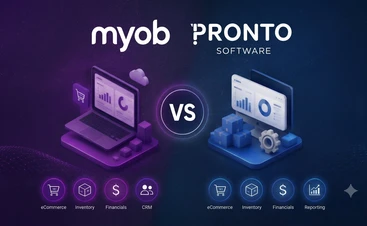
View Article: Pronto Xi vs Dynamics 365: Which ERP Is Better for eCommerce?
Choosing an ERP for eCommerce is not the same as choosing an online store. Shopify or Adobe Commerce should manage the customer-facing shopping experience, while the ERP handles the operational work behind it: inventory, customer records, pricing, purchasing, warehousing, order fulfilment and financial reporting. Pronto Xi and Microsoft Dynamics 365 Business Central can both serve…
-
View Article: SAP Business One vs NetSuite: Which ERP is Better for eCommerce?
If you’re evaluating a new ERP system, there’s a good chance SAP Business One and Oracle NetSuite are both on your shortlist. Both platforms are well-established, trusted by thousands of businesses worldwide and capable of supporting manufacturers, wholesalers, distributors and retailers. However, while they often compete for the same customers, they have very different strengths.…
-
View Article: Infor M3 for B2B eCommerce: What Manufacturers and Distributors Need to Know
For manufacturers, wholesalers and distributors, your ERP is the engine that keeps your business running. It manages inventory, pricing, purchasing, production, warehousing and customer relationships. But when it comes to B2B eCommerce, your ERP alone isn’t enough. Today’s business buyers expect the same convenient online purchasing experience they receive as consumers. They want personalised pricing,…
-
View Article: How Much Does an ERP Integration Cost?
If you’re planning a new eCommerce project, one of the first questions you’ll ask is: “How much will it cost to integrate our ERP?” The honest answer is that it depends. ERP integrations range from relatively straightforward inventory synchronisation through to highly complex, business-critical platforms that support customer-specific pricing, multiple warehouses, manufacturing workflows and real-time…
-
View Article: SAP Business One vs Microsoft Dynamics 365 Business Central: Which ERP Is Better for eCommerce?
When your ERP sits at the centre of your business, choosing the right eCommerce platform becomes just as important as selecting the ERP itself. Both SAP Business One and Microsoft Dynamics 365 Business Central are among the world’s most popular ERP solutions for small and mid-sized businesses. They manage inventory, purchasing, finance, customers and operations…
-
View Article: Choosing an eCommerce Platform for AdvanceRetail: Everything You Need to Know
If you’re using AdvanceRetail as your ERP or retail management platform, choosing the right eCommerce platform is one of the most important technology decisions you’ll make. While AdvanceRetail provides the operational backbone for many Australian retailers, your online store has a very different job to perform. It needs to attract customers, convert visitors into buyers,…
-
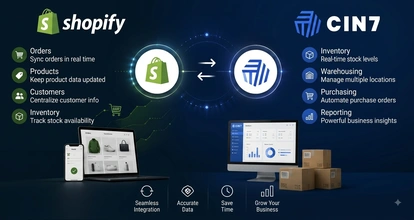
View Article: Integrating Cin7 with Shopify: Everything You Need to Know
Whether you’re using Cin7 Core or Cin7 Omni, integrating Cin7 with Shopify can significantly improve inventory accuracy, streamline order management and create a scalable foundation for your eCommerce business. However, a successful integration involves much more than simply connecting two platforms. The most successful implementations begin with a clear understanding of which system owns what,…
-
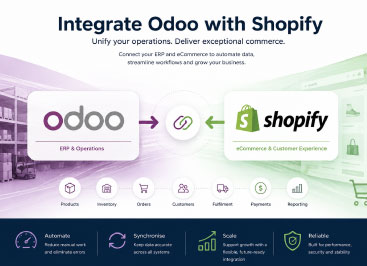
View Article: How to Integrate Odoo with Shopify: A Complete Guide
Odoo and Shopify can be a powerful combination for retailers, wholesalers and manufacturers that need strong operational management behind a modern eCommerce experience. Odoo can manage many of the systems that sit behind an eCommerce business, including inventory, warehousing, purchasing, accounting, CRM, manufacturing and order management. Shopify, meanwhile, provides a highly scalable commerce platform designed…
-
View Article: The Complete Guide to Automotive eCommerce
Selling automotive parts online presents challenges that simply do not exist in most other forms of eCommerce. A customer buying a pair of shoes generally needs to choose a size and colour. A customer buying a suspension component, brake part or engine component needs to know whether that specific product will fit their vehicle. That…
-
View Article: Pronto Xi vs MYOB Acumatica for eCommerce: Which ERP Is Right for Your Business?
Selecting the right ERP therefore has implications well beyond accounting. It influences how effectively your eCommerce platform can scale, how easily new sales channels can be introduced, and how efficiently your team can fulfil customer orders. Two ERP platforms frequently considered by Australian wholesalers, manufacturers and retailers are Pronto Xi and MYOB Acumatica. Enterprise Resource…
-
View Article: How to Choose an eCommerce Platform for Microsoft Dynamics 365 Finance & Supply Chain Management
Microsoft Dynamics 365 Finance & Supply Chain Management is one of the world’s leading enterprise ERP platforms. It powers complex manufacturers, distributors, wholesalers and retailers that often operate across multiple countries, warehouses and legal entities. When organisations running Dynamics 365 begin planning an eCommerce project, one of the biggest decisions isn’t how to integrate their…
-
View Article: How to Integrate Apparel21 with Shopify: The Complete Guide
Fashion retailers and wholesalers increasingly expect their ERP and eCommerce platform to work together seamlessly. Customers want accurate stock availability, up-to-date pricing, fast order fulfilment and a consistent buying experience across every channel. For businesses using Apparel21, integrating with Shopify can provide a modern, scalable eCommerce platform while allowing Apparel21 to remain the operational backbone…
-
View Article: How to Choose the Right eCommerce Platform for Your ERP
Selecting an eCommerce platform is no longer just a marketing decision. For most established retailers, wholesalers and manufacturers, the ERP system already manages the core of the business, including inventory, pricing, purchasing, warehousing, customer accounts and financials. The eCommerce platform becomes another critical business application that must work seamlessly with that ERP. Unfortunately, many businesses…
-
View Article: How to Integrate SAP Business One with Shopify: The Complete Guide
Enterprise retailers, wholesalers and manufacturers increasingly expect their eCommerce platform to operate as a seamless extension of their ERP. If your business uses SAP Business One, integrating it with Shopify can automate critical business processes, improve customer experiences and eliminate the manual administration that often limits growth. At OSE, we’ve delivered complex ERP integrations for…
-
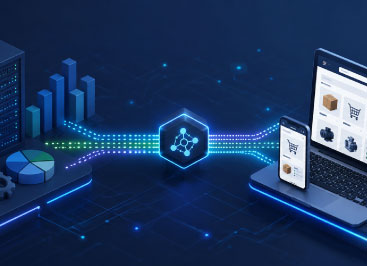
View Article: ERP Integration for B2B eCommerce: The Complete Guide
For many B2B businesses, launching a new eCommerce platform is not primarily a website project. It is an operational integration project. The online experience may be delivered through Shopify Plus, Adobe Commerce or another eCommerce platform, but much of the information required to serve customers already exists elsewhere. Products, inventory, customer accounts, contract pricing, credit…
-
View Article: How to Integrate NetSuite with Shopify Plus: A Practical Guide
Integrating NetSuite with Shopify Plus can provide retailers, wholesalers and B2B businesses with a connected commerce environment spanning customer experience, inventory, order management, fulfilment and financial operations. Shopify Plus can manage the digital buying experience, including storefront content, product discovery, checkout, customer accounts and B2B purchasing. NetSuite can remain responsible for the operational and financial…