Category: eCommerce Strategy
Explore expert eCommerce strategy insights from OSE covering digital transformation, platform selection, business cases, ROI, customer experience, B2B commerce, growth strategies and practical advice to help organisations plan, justify and deliver successful eCommerce initiatives.
-
View Article: Why Is Your Online Revenue Flat? 10 Reasons Your eCommerce Store Has Stalled (And What to Do About It)
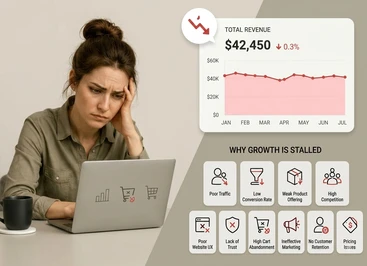
If your online revenue has plateaued, you’re not alone. Many retailers and manufacturers experience periods where online sales simply stop growing. Traffic may still be coming to the site. Orders are still being placed. Marketing spend continues. Yet month after month, revenue barely moves. The immediate reaction is often to increase advertising budgets, redesign the…
-
View Article: How to Add AI Search to Your eCommerce Website
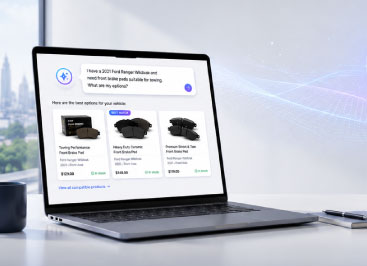
Search has always been one of the most important functions of an eCommerce website. For retailers with hundreds, thousands or even hundreds of thousands of products, it is often the fastest path between a customer arriving on a website and finding the product they want to buy. But traditional eCommerce search has a fundamental limitation.…
-
View Article: The Complete Guide to Automotive eCommerce
Selling automotive parts online presents challenges that simply do not exist in most other forms of eCommerce. A customer buying a pair of shoes generally needs to choose a size and colour. A customer buying a suspension component, brake part or engine component needs to know whether that specific product will fit their vehicle. That…
-
View Article: How Much Does a Shopify Plus Project Cost? (Pricing Guide)
One of the first questions businesses ask when considering Shopify Plus is simple: “How much is this going to cost?” Unfortunately, finding a clear answer isn’t easy. Many articles suggest a Shopify Plus implementation could cost anywhere between $40,000 and $500,000. While technically true, that range is so broad that it provides very little value…
-
View Article: What Does an eCommerce Discovery Workshop Actually Deliver?
One of the first questions businesses ask when embarking on an eCommerce project is: “What exactly is a Discovery Workshop?” It’s a fair question. Almost every agency talks about discovery, yet very few explain what actually happens, why it matters, or what you’ll receive at the end of the process. For organisations investing hundreds of…
-
View Article: How AI Is Changing B2B Buying (And What Your eCommerce Platform Needs to Do About It)
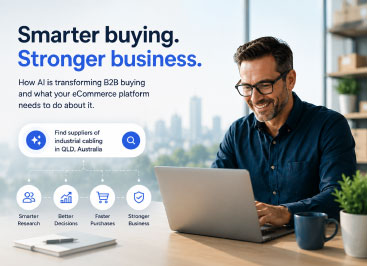
For the past two decades, B2B eCommerce has largely been about one thing: making it easier for existing customers to place orders online. The priorities were straightforward. Integrate with the ERP. Display customer-specific pricing. Provide account history. Enable repeat ordering. If your platform delivered these fundamentals well, you were considered ahead of the market. Today,…
-
View Article: The Biggest Mistakes Manufacturers Make When Building a B2B eCommerce Portal
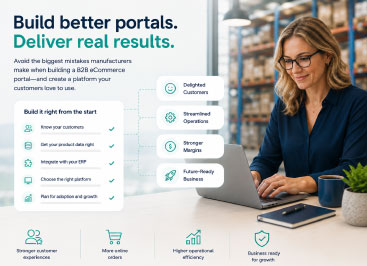
For many manufacturers, investing in a B2B eCommerce portal represents one of the most significant digital transformation projects they’ll undertake. Done well, a modern B2B portal can streamline operations, improve customer satisfaction, reduce administrative costs and enable sustainable business growth. Customers gain the ability to place orders online 24/7, view customer-specific pricing, check stock availability…
-
View Article: The Complete Guide to Gift Card Strategy for eCommerce Retailers
Gift cards are often treated as a simple feature that B2C commerce platform typically offer. In reality, they’re one of the most effective revenue drivers available to retailers. Across the retailers we’ve worked with, it’s surprisingly common to see gift cards among the best-selling products. In several cases, they’ve even been the number one selling…
-
View Article: How to Structure Product Categories for eCommerce Success
Most eCommerce businesses invest heavily in their website, ERP integration and marketing, yet one of the most important foundations is often overlooked. Product category architecture. Poor category structures make it harder for customers to find products, reduce search visibility, confuse AI search engines and increase the complexity of managing large product catalogues. The reality is…
-
View Article: Shopify Plus vs Adobe Commerce for Multi-Store Retailers
Choosing an eCommerce platform becomes more complicated when a retailer operates multiple stores, brands, regions or fulfilment locations. Both Shopify Plus and Adobe Commerce support large multi-store retail operations. However, the two platforms approach multi-store commerce very differently. Shopify Plus generally prioritises operational simplicity, rapid deployment and a managed SaaS environment. Adobe Commerce provides a…
-
View Article: How to Choose the Best Platform for Multi-Store eCommerce
As businesses grow, a single eCommerce website is often no longer enough. You may acquire new brands, expand internationally, launch dedicated B2B portals, or separate retail and wholesale operations. Before long, you’re managing multiple storefronts that all need to share products, inventory, customer data and backend systems. At this point, the challenge is no longer…
-
View Article: How to Calculate the Total Cost of Ownership (TCO) of an eCommerce Platform
When businesses evaluate a new eCommerce platform, the conversation often begins with implementation costs or software licence fees. While these are important, they only represent a small part of the overall investment. The real cost of an eCommerce platform is measured over many years, not on the day it goes live. This is known as…
-
View Article: Enterprise eCommerce Platform Requirements: The Complete Buyer’s Checklist
Choosing an enterprise eCommerce platform is one of the most significant technology decisions a retailer, wholesaler or manufacturer will make. The right platform becomes the foundation of your digital business for many years. The wrong platform can result in costly customisations, operational inefficiencies, frustrated customers and expensive replatforming projects only a few years later. While…
-
View Article: How to Choose the Right eCommerce Platform for Your ERP
Selecting an eCommerce platform is no longer just a marketing decision. For most established retailers, wholesalers and manufacturers, the ERP system already manages the core of the business, including inventory, pricing, purchasing, warehousing, customer accounts and financials. The eCommerce platform becomes another critical business application that must work seamlessly with that ERP. Unfortunately, many businesses…
-
View Article: How to Get Your Products Found in AI Search
Traditional search engine optimisation (SEO) is no longer the only way customers discover products online. Increasingly, shoppers are asking questions directly to AI-powered search platforms like ChatGPT, Google AI Overviews, Google Gemini, Perplexity and Microsoft Copilot. Rather than returning a list of websites, these platforms generate answers, recommend products and cite retailers they consider authoritative.…
-
View Article: How to Get Your Products Recommended by ChatGPT
Consumers are increasingly using ChatGPT to research products, compare alternatives and decide what to buy. Instead of searching for a particular product name, they can describe a need: ChatGPT can interpret these requirements, research suitable products and present recommendations. For retailers, this creates a new product-discovery channel—and a new visibility challenge. There is no switch…
-
View Article: The Complete Guide to eCommerce Product Data
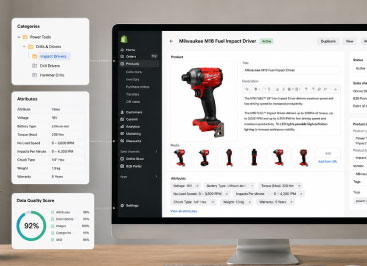
Your Product Data Is More Important Than Your eCommerce Platform When businesses begin planning an eCommerce project, most of the discussion centres around selecting the right platform. Should you choose Shopify or Adobe Commerce? Should you implement a new ERP integration? Should you invest in a Product Information Management (PIM) system? While these are all…
-
View Article: The True Cost of Maintaining a Legacy eCommerce Platform
Many businesses continue operating on legacy eCommerce platforms because “they still work.” Orders continue flowing. Customers can still buy products. Staff know how the system operates. Replacing the platform feels expensive, disruptive and difficult to justify. Yet the biggest cost of a legacy platform is rarely visible on a balance sheet. Over time, ageing commerce…