Technology is evolving rapidly. Stay ahead with insights from our team on eCommerce, AI, cloud and digital transformation—covering the strategies, platforms and innovations shaping modern business today.
For many organisations, replacing an existing eCommerce platform is not a technology decision. It’s a business investment that requires a business case. Whether you’re considering Shopify Plus, Adobe Commerce or another enterprise platform, one question inevitably comes from executives, finance teams and boards: “What’s the return on investment?” Unfortunately, many businesses justify a replatform purely…
Integrating NetSuite with Shopify Plus can provide retailers, wholesalers and B2B businesses with a connected commerce environment spanning customer experience, inventory, order management, fulfilment and financial operations. Shopify Plus can manage the digital buying experience, including storefront content, product discovery, checkout, customer accounts and B2B purchasing. NetSuite can remain responsible for the operational and financial…
Integrating Pronto Xi with Shopify Plus can give B2B customers a faster and more convenient way to place orders, access account pricing and manage their purchasing online. However, a successful B2B integration involves much more than transferring products into Shopify and sending completed orders back to Pronto Xi. Wholesale and trade businesses often have complex…
Replacing an eCommerce platform is one of the most significant technology investments a retailer or wholesaler can make. Yet many projects never progress beyond the planning stage. Not because the existing platform is meeting the business’s needs, but because the organisation struggles to justify the investment internally. Whether you’re using Shopify, Adobe Commerce, Magento Open…
For many Shopify retailers, growth has traditionally been driven by customer acquisition. More ads.More traffic.More first-time buyers.More campaigns. That approach still matters, but it is becoming harder to rely on alone. Advertising costs remain high, customers are harder to target, and retailers are under pressure to grow revenue without simply increasing spend. This is why…
Enterprise B2B commerce has changed significantly over the past decade. Wholesale businesses are no longer looking for an online catalogue with basic ordering capabilities. They expect digital commerce platforms to integrate seamlessly with ERP systems, support customer-specific pricing, automate purchasing workflows and provide the flexibility to adapt as their operations evolve. For many organisations, the…
Enterprise procurement has evolved significantly over the past decade. Organisations expect purchasing to be as simple as shopping online, while maintaining strict approval workflows, negotiated pricing and procurement policies. This is where Coupa has become a leading procurement platform. For suppliers selling to enterprise customers, integrating Coupa with an eCommerce platform creates a seamless buying…
Retailers rely on their ERP and point of sale systems to manage the operational side of the business. Inventory, pricing, promotions, customer accounts and fulfilment all originate from these core platforms, making them critical to delivering a consistent online shopping experience. For businesses using Advance Retail, eCommerce integration is far more than simply displaying products…
For retailers and distributors running Infor M3, launching or scaling a Shopify store is rarely just a front-end project. With Shopify managing the customer experience, product discovery, checkout and account functionality, while Infor M3 remains responsible for critical operational data such as inventory, pricing, customers, orders, warehousing, fulfilment and finance. The quality of the integration…
For many retailers, growth has traditionally meant finding more customers. More traffic. More advertising. More campaigns. More new customer acquisition. That approach still matters, but it is becoming harder to rely on alone. Customer acquisition costs remain high. Competition for attention is intense. Privacy changes have made targeting less predictable. At the same time, consumers…
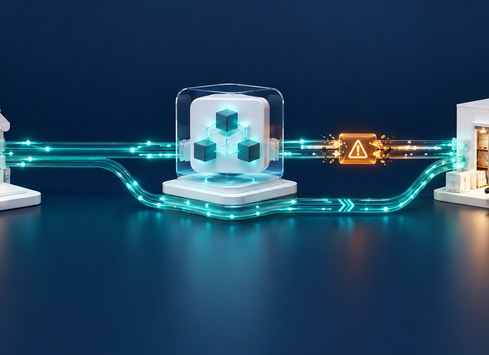
A successful B2B eCommerce platform rarely operates as a standalone system. The online store may provide the customer-facing experience, but the information required to support that experience is usually spread across an ERP, CRM, warehouse platform, product information system, accounting application and other business systems. Customers expect to see their correct pricing, available inventory, account…
As eCommerce businesses grow, managing orders, inventory, customers and financial data across separate systems becomes increasingly difficult. Shopify manages the online buying experience, while Microsoft Dynamics 365 Business Central manages inventory, purchasing, warehousing, fulfilment and financial operations. Without a reliable connection between the two platforms, teams can become dependent on spreadsheets, manual data entry and…
For businesses using Pronto Xi, launching a new Shopify Plus store involves more than just transferring products and orders between two platforms. Pronto Xi is often responsible for critical operational data, including product records, inventory, customer accounts, contract pricing, credit terms, fulfilment and financial reporting. Shopify Plus, meanwhile, becomes the customer-facing commerce platform through which…
Choosing the right ERP is a major decision for any growing eCommerce business. For retailers, wholesalers, distributors and B2B suppliers, selecting the right ERP for their business is a critical choice. When it works well, the business can scale with confidence. When it does not, the commerce experience can quickly become difficult to manage. Two…
For many wholesalers, distributors and growing product businesses, Cin7 Omni plays a central role in inventory, order management, fulfilment and operational control. It helps manage products, stock, sales channels, orders, suppliers, warehouses and integrations. For businesses with multiple channels, complex inventory needs, EDI requirements or advanced operational workflows, Cin7 Omni can become one of the…
Choosing the best B2B eCommerce platform is not just a website decision. For wholesalers, distributors, manufacturers and trade suppliers, B2B eCommerce needs to support the way the business actually operates. That usually means account pricing, customer-specific catalogues, stock visibility, payment terms, approvals, repeat ordering, invoice access, order history, ERP integration and fulfilment workflows. That is…
For many enterprise and mid-market businesses, SAP S/4HANA sits at the centre of operations. It manages finance, inventory, purchasing, customer accounts, sales orders, fulfilment, reporting and core business processes. For eCommerce businesses, this makes SAP S/4HANA more than an ERP. It becomes a key part of the customer experience. When SAP S/4HANA is properly integrated…
Choosing the right ERP is one of the most important technology decisions an eCommerce business can make. For retailers, wholesalers, distributors and manufacturers, the ERP often sits at the centre of the business. It controls inventory, pricing, purchasing, customer accounts, fulfilment, finance and reporting. When the ERP is not properly aligned with the eCommerce platform,…