Our services
Adobe CommerceComplex catalogues, multi-store and B2BShopify PlusNew stores, migrations and growthB2B eCommerceTrade ordering, pricing and portalsSupport & MaintenanceOngoing care for Adobe Commerce and ShopifySystems IntegrationConnect your store, product data and ERPSearch VisibilitySEO, AEO and GEO
Author: ose-admin
-
View Article: How to Scale Online B2B Revenue
For many B2B companies, generating online revenue is no longer the difficult part. The real challenge is scaling it. A business may attract website traffic, produce leads and close occasional digital opportunities without having a repeatable growth engine. Revenue remains dependent on individual salespeople, inconsistent campaigns or a small number of major customers. Sustainable scale…
-
View Article: What Are AI Agents? How They Can Transform Your Business
Artificial intelligence has already changed how many people write, research, analyse information and communicate. But the next shift may be more significant: AI systems that do not simply answer questions, but can also complete tasks. These systems are known as AI agents. An AI assistant might help an employee draft a customer email. An AI…
-
View Article: Pronto Xi vs Dynamics 365: Which ERP Is Better for eCommerce?
Choosing an ERP for eCommerce is not the same as choosing an online store. Shopify or Adobe Commerce should manage the customer-facing shopping experience, while the ERP handles the operational work behind it: inventory, customer records, pricing, purchasing, warehousing, order fulfilment and financial reporting. Pronto Xi and Microsoft Dynamics 365 Business Central can both serve…
-
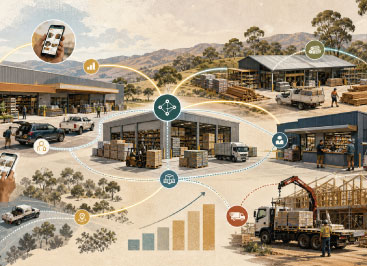
View Article: eCommerce for Hardware Retailers: How to Grow Your Online Sales Profitably
For large hardware retailers, ecommerce is no longer a separate sales channel. It is the connective layer between product data, inventory, stores, distribution centres, suppliers, trade accounts and customers. When those elements work together, digital investment can increase revenue, improve gross margin, release working capital and lower the cost of serving customers. When they do…
-
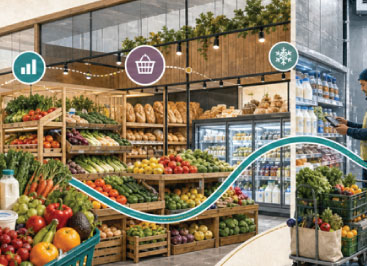
View Article: FMCG eCommerce Strategy: How Retailers Can Grow Revenue and Protect Margin
FMCG ecommerce presents retailers with an unusual commercial challenge. Customers purchase frequently, but individual items are often inexpensive. Product ranges are large, availability changes quickly, promotions influence demand and fulfilment can consume a substantial share of the basket’s margin. Growing online sales is therefore not enough. An FMCG retailer can increase digital revenue while weakening…
-
View Article: AI in Ecommerce: Where Australian Retailers Should Invest (and Where They Shouldn’t)
Artificial intelligence has moved rapidly from experiment to expectation in ecommerce. Retailers are being promised smarter search, automated merchandising, individualised customer journeys, faster content production and autonomous shopping agents. Yet many ecommerce teams are still working with fragmented product information, disconnected customer data and platforms that make basic improvements difficult. That creates a practical question:…