Category: eCommerce Insights
Technology is evolving rapidly. Stay ahead with insights from our team on eCommerce, AI, cloud and digital transformation covering the strategies, platforms and innovations shaping modern business today.
-
View Article: Top 5 AI Agent Use Cases for eCommerce Growth
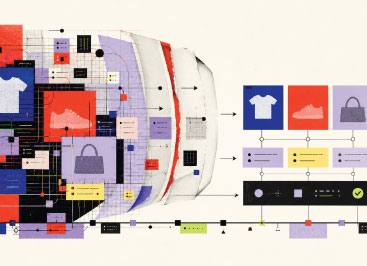
Artificial intelligence is already helping eCommerce teams generate content, analyse data and respond to customers. AI agents take this further. Rather than waiting for a separate instruction at every step, an AI agent can interpret an objective, gather relevant information, choose an appropriate action and use connected systems to complete a task. It might analyse…
-
View Article: The Home & Garden eCommerce Growth Playbook: How to Increase Conversion, Average Order Value and Margin
Home and garden ecommerce presents retailers with an unusual growth challenge. Customers increasingly begin their journey online, but many products in the category remain difficult to evaluate without seeing, touching or measuring them. Furniture must fit a room. Paint must look right under different lighting. Garden products may require technical knowledge. Bulky orders introduce delivery…
-
View Article: The True Cost of an eCommerce Platform: How Retailers Can Reduce TCO Without Starting Again
When ecommerce costs become difficult to control, replatforming is often presented as the obvious solution. A newer platform promises lower licence fees, fewer upgrades, faster releases and less technical overhead. For retailers operating complex Adobe Commerce environments, the comparison frequently points towards a SaaS platform such as Shopify Plus. Sometimes that recommendation is correct. But…
-
View Article: How to Scale Online B2B Revenue
For many B2B companies, generating online revenue is no longer the difficult part. The real challenge is scaling it. A business may attract website traffic, produce leads and close occasional digital opportunities without having a repeatable growth engine. Revenue remains dependent on individual salespeople, inconsistent campaigns or a small number of major customers. Sustainable scale…
-
View Article: What Are AI Agents? How They Can Transform Your Business
Artificial intelligence has already changed how many people write, research, analyse information and communicate. But the next shift may be more significant: AI systems that do not simply answer questions, but can also complete tasks. These systems are known as AI agents. An AI assistant might help an employee draft a customer email. An AI…
-
View Article: Pronto Xi vs Dynamics 365: Which ERP Is Better for eCommerce?
Choosing an ERP for eCommerce is not the same as choosing an online store. Shopify or Adobe Commerce should manage the customer-facing shopping experience, while the ERP handles the operational work behind it: inventory, customer records, pricing, purchasing, warehousing, order fulfilment and financial reporting. Pronto Xi and Microsoft Dynamics 365 Business Central can both serve…
-
View Article: eCommerce for Hardware Retailers: How to Grow Your Online Sales Profitably
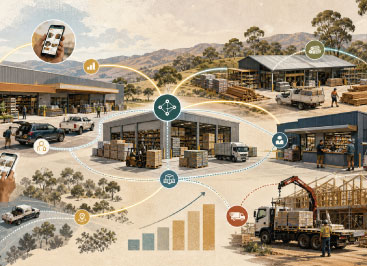
For large hardware retailers, ecommerce is no longer a separate sales channel. It is the connective layer between product data, inventory, stores, distribution centres, suppliers, trade accounts and customers. When those elements work together, digital investment can increase revenue, improve gross margin, release working capital and lower the cost of serving customers. When they do…
-
View Article: FMCG eCommerce Strategy: How Retailers Can Grow Revenue and Protect Margin
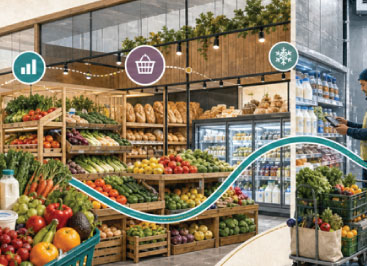
FMCG ecommerce presents retailers with an unusual commercial challenge. Customers purchase frequently, but individual items are often inexpensive. Product ranges are large, availability changes quickly, promotions influence demand and fulfilment can consume a substantial share of the basket’s margin. Growing online sales is therefore not enough. An FMCG retailer can increase digital revenue while weakening…
-
View Article: AI in Ecommerce: Where Australian Retailers Should Invest (and Where They Shouldn’t)
Artificial intelligence has moved rapidly from experiment to expectation in ecommerce. Retailers are being promised smarter search, automated merchandising, individualised customer journeys, faster content production and autonomous shopping agents. Yet many ecommerce teams are still working with fragmented product information, disconnected customer data and platforms that make basic improvements difficult. That creates a practical question:…
-
View Article: 10 eCommerce Quick Wins That Can Increase Revenue
Major ecommerce growth does not always require a new platform, a redesigned storefront or a multi-year transformation program. Established retailers often have substantial revenue opportunities hidden inside their existing customer journey: unsuccessful searches, unclear availability, weak product information, poorly timed delivery costs and missed basket-building opportunities. These problems may appear small in isolation. At scale,…
-
View Article: eCommerce Structured Data: How to Build an Advanced Schema Implementation
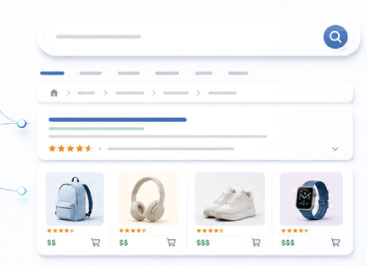
Structured data is one of the highest-value technical improvements an eCommerce retailer can make to its website. It is also frequently underdone. Many eCommerce websites have some structured data. A standard theme, SEO plugin or commerce platform might automatically output a Product schema containing a product name, price and availability. Technically, structured data is present.…
-
View Article: Omnichannel Retail Checklist: How to Build a Seamless Customer Experience
Omnichannel retail sounds simple in principle. Customers should be able to browse, purchase, receive and return products however they choose, whether that happens online, in a store, through a marketplace or across multiple channels. Delivering that experience reliably is considerably harder. True omnichannel retail requires commerce, ERP, POS, inventory, customer data, fulfilment and physical stores…
-
View Article: eCommerce Product Filters: How to Build Better Category Page Filtering
Product filters are one of the most important product discovery tools on an eCommerce website. They are also surprisingly easy to get wrong. A retailer with 2,000 products in a category may technically have excellent products, competitive pricing and strong availability. But if a customer cannot quickly reduce those 2,000 products to the 12 that…
-
View Article: How to Build the Ultimate eCommerce Store Finder
For an eCommerce retailer with multiple physical locations, a store finder can be one of the most commercially valuable parts of the website. Yet many retailers treat it as little more than a map. Enter your postcode. Find the nearest pin. Get an address. That solves one problem, but it misses a much larger opportunity.…
-
View Article: The Biggest eCommerce Challenges Facing Electrical and Consumer Electronics Retailers
From national retailers like JB Hi-Fi, Harvey Norman and The Good Guys to specialist camera stores, computer retailers, audio specialists and independent consumer electronics businesses across Australia and New Zealand, today’s eCommerce landscape is more competitive than ever. Whether you’re selling televisions, laptops, cameras, drones, appliances, networking equipment or premium audio systems, customers expect an…
-
View Article: How to Build the Best Loyalty Program for Your Business
Customer acquisition has never been more competitive. Rising advertising costs, increased consumer choice and changing shopping habits mean that attracting a new customer is only half the battle. The businesses that consistently outperform their competitors are those that give customers a compelling reason to return again and again. That is where a well-designed loyalty program…
-
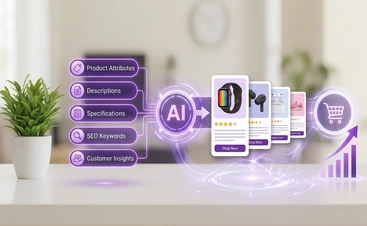
View Article: AI Product Data: The Competitive Advantage Retailers Are Missing
Artificial Intelligence is changing how customers discover, evaluate and purchase products. While much of the conversation has centred around ChatGPT, AI shopping assistants and automated customer service, many retailers are overlooking the factor that will determine who succeeds in this new era. It is not the AI platform. It is not the commerce platform. It…
-
View Article: How to Improve Mobile eCommerce Conversion Rates
Mobile traffic now represents a significant share of eCommerce visits for most retailers, but mobile conversion rates often continue to lag behind desktop. That gap matters. If 70% of your customers are visiting on mobile, even a relatively small improvement in mobile conversion can have a significant impact on revenue without increasing advertising spend or…